RoundupVacuum Sealers
Best Vacuum Sealer for Home Use: 5 Honest Picks
24 min read
Read the guideWorth It
We analyzed seal strength, bag costs, wet-food handling, reliability, and value for chamber and edge vacuum sealers. Discover if a vacuum sealer is worth it.
We earn a commission if you buy through our links, at no extra cost to you. As an Amazon Associate, we earn from qualifying purchases. Scores and verdicts are set before any link is placed and never change after.
Quick answer
A vacuum sealer is worth it if you regularly buy food in bulk, meal prep, hunt, or garden: the research record puts the food-waste and bulk-buying savings at 300 to 850 dollars a year for active households, which runs well past the bag bill on any lane.
If you only seal a few bags a month, the machine and the ongoing cost of bags outweigh the savings, and plain freezer bags serve that lighter duty for less.
The verdict meter
It depends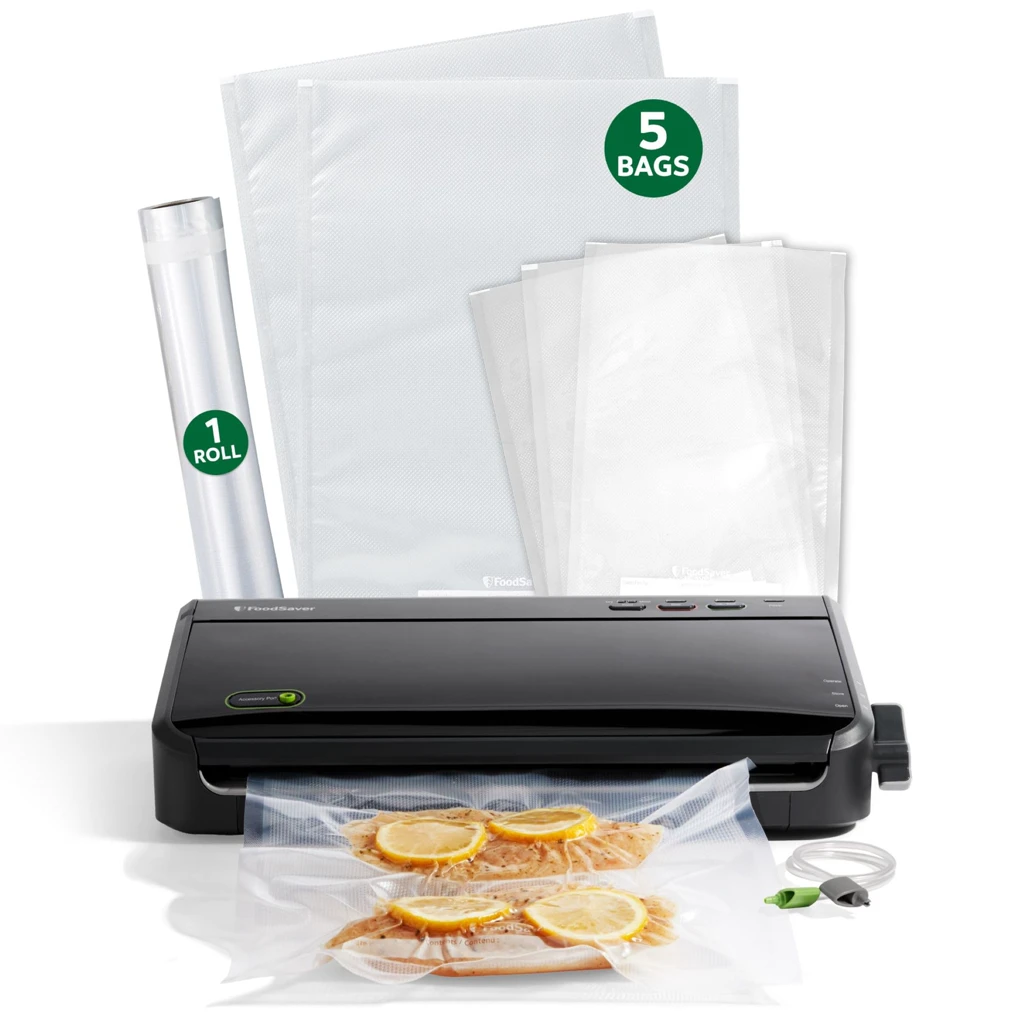
Top pick
Price: $179.99
(Price fact-checked - Details)
16.3 x 9.2 x 4 inches120 watts5 yearscountertop edge sealer with accessory portdry, moist, pulse
| Item | US dollars per year |
|---|---|
| Initial Machine Cost (budget edge sealer: FoodSaver VS100 at 84.67) | $85 |
| Brand Edge Bags (Year 1) | $208 |
| Generic Edge Bags (Year 1) | $62 |
| Chamber Pouches (Year 1) | $29 |
The payback point
With brand-name bags, a budget lane edge sealer like the FoodSaver VS100 pays for itself through food savings alone: even at the low end of the research record's range, about 300 dollars a year, the 84.67 dollar machine clears its cost in under four months, and the high end of the range pays it back inside six weeks.
A chamber sealer recovers its higher price in about 16 months on pouch savings alone against the brand-bag lane, before any food savings count.
The payback timeline depends heavily on bag choice: generic bags cut the consumable bill dramatically, while brand bags extend it. Bulk buying and meal prep savings compound over time, making the sealer more valuable the longer you own it.
For hunters or gardeners preserving large quantities, the payback can be even faster due to the high volume of sealing.
Every figure in this model is our recorded editorial estimate from the sources listed below, dated and re-verified quarterly. Re-run the model with your own numbers before applying it to your situation.
You buy food in bulk at Costco or warehouse clubs and want to extend freezer life by 2 to 3 years
You meal prep weekly and store portions for easy dinners, reducing daily cooking time
You hunt, fish, or garden and preserve large quantities of meat or produce for seasonal use
You want to reduce food waste by storing leftovers more effectively, cutting down on spoilage
You sous vide and need reliable, airtight bags for long cooks, ensuring consistent results
You are willing to invest in generic bags to lower long-term costs, improving the return on investment
You repackage bulk hauls on a real rhythm: the r/Frugal owners call their sealer a game changer and report running it almost every other day through Costco runs
You cook ahead in batches: sealed portions hold freezer quality for the brand's 2 to 3 year window, so one monthly cook can cover the month
You only seal food a few times a year, making the investment hard to justify
You dislike the upfront cost of a machine and ongoing bag expenses, preferring to minimize kitchen spending
You have limited kitchen counter or storage space for the appliance, especially larger models
You rarely buy in bulk or cook meals ahead of time, reducing the need for long-term storage
You would rather stay on the disposable lane than run the bag math: plain freezer bags handle a few bags a month for less with no machine behind them, while even the generic bag lane on this page's chart runs about 62 dollars a year and only earns that back at bulk volume
You want no part of the upkeep the record attaches to the machine: the lid gasket compresses somewhere in years one through three and wants checking then, and the bag lane is a standing purchase, 29 to 208 dollars a year by lane on this page's own math, so the zero-maintenance alternatives fit that kitchen better
You primarily store food for short periods, where cheaper methods like zipper bags suffice
You have a very small household with minimal food storage needs, making the sealer underutilized
The independent lab findings and the long-term owner patterns on this question, from the research record behind the page.
The independent labs and the long-term owner record agree on the shape of the answer.
The Barbecue Lab's endurance run counted 14 consecutive FM2100 seals without a miss, and shouldit, an independent product-testing lab, clocked the Nesco VS-12's pull at 80 kPa (kilopascals, the unit a sealer's suction strength is rated in), the strongest in its database; owner reports echo both, from ribeyes still excellent after about two years with no freezer burn to owners who switched to the Nesco and report it locking tighter and evacuating faster.
The complaints are just as consistent.
Heavy batch threads report death cycles of one to two years with pumps and heat strips named, wet-food threads repeat that moisture in the seal zone kills edge seals until the liquid is frozen first, and chamber owners answer with perfect liquid seals on a machine whose every part is sold publicly.
The honest summary: the machine earns its keep at the rate you seal, and the lane you pick decides the wet-food question.
For occasional use, heavy-duty zipper bags can work for short-term freezer storage. They are cheaper than a vacuum sealer but do not prevent freezer burn as effectively over long periods.
They are a good option if you only need to store food for a few weeks at a time, but for longer storage, the vacuum sealer provides superior protection.
Brands like Glad and Ziploc offer freezer bags designed to withstand cold temperatures, but they still allow air to penetrate over time, leading to quality degradation.
A food dehydrator removes moisture instead of air, making it ideal for creating jerky, dried fruits, and herbs. It is a great alternative if your primary goal is preservation without freezing, and it takes up less counter space than a vacuum sealer.
Dehydrated foods have a long shelf life and are lightweight, making them perfect for camping and backpacking. However, dehydration changes the texture and flavor of foods, so it is not suitable for all preservation needs.
For dry goods and some moist foods, mason jars with a handheld sealer attachment offer a reusable, airtight option. This is a low-cost entry point into vacuum sealing that works well for pantry items but is not suitable for liquids or large quantities.
The jars are transparent, so contents show at a glance, and they double for canning, fermenting, and storage. The main limitation is size, since large items will not fit a standard jar mouth.
For occasional sealing, the zipper bags sold for hand-pump storage do most of the job for a few dollars: close the zip, press the pump over the valve, and the air leaves in a few strokes.
It is the honest low-commitment lane, with no machine, no rolls, and no duty cycle, and the pump lives in a drawer. The pull is nowhere near a heat-sealed bag's, so plan it for pantry goods and weeks-long freezer stays rather than the years a sealed bag holds.
For short-term cuts, the classic butcher-paper wrap plus an outer freezer-paper layer still protects a steak or a roast through weeks in the freezer.
It is the zero-equipment route butchers use, it costs cents per cut, and it forgives odd shapes a bag does not.
The wrap excludes air rather than removing it, so plan on finishing the cut inside a couple of months, which is exactly what the short-term lane is for.
For dry goods, oxygen absorber packets dropped into an airtight container do the preservation work without any machine: the packets bind the leftover oxygen, the container blocks new air, and rice, beans, and grains keep for years on the pantry shelf.
It is standard practice for long-term dry storage, it costs pennies per batch, and it needs no electricity or bags. The jar-sealing route covers the same goods when a vacuum machine is already on the counter.
The verdict meter
It dependsThe verdict meter lands mid-scale: 8 of the 16 situations we weighed favor buying, 8 argue against. The panel your home resembles is your answer.
Our stance: A vacuum sealer is a worthwhile investment for active households that buy in bulk, meal prep, or preserve large quantities of food. The savings on food waste and the convenience of long-term storage often justify the initial cost and ongoing bag expenses. However, for casual users, the benefits may not outweigh the costs.
Yes, a vacuum sealer is worth it for meal prep. It allows you to cook meals in bulk, portion them out, and store them for weeks without freezer burn.
Owners report that it saves time and money by reducing food waste and the need for daily cooking. The key is sealing frequently enough to justify the bag costs.
For example, a household that preps meals weekly can save hundreds of dollars annually by buying ingredients in bulk and storing them properly.
Vacuum-sealed meals also retain their flavor and texture better than those stored in conventional containers, making them ideal for busy weekdays when you want a home-cooked meal without the prep time.
The ranked machines live in the best vacuum sealer roundup.
For a wet, high-volume kitchen, yes.
Chamber machines seal liquids natively where edge machines need the freeze-first chore, and at ten seals a week the pouch lane runs about 15 to 40 dollars a year against 130 to 235 on brand-name edge bags, so the bag bill alone repays a chunk of the machine.
The honest cost is the counter: a 17.55 pound body that claims a permanent spot, so a small or occasional kitchen stays on the edge lane.
Match the money to your sealing rhythm rather than one fixed figure.
The under 100 dollar budget band covers light duty: the Geryon E2900-MS handles occasional seals, while the FoodSaver VS100, verified at 84.67 dollars, brings the jar ecosystem and a 5 year warranty.
Step up to the 100 to 250 dollar mid-range band and the serious home machines appear: the Nesco VS-12 lists at 133.99 dollars, with the FoodSaver FM2100 verifying at 179.99.
Wet or heavy batch duty justifies the 250 to 500 dollar premium band, where the Avid Armor USV20 chamber sealer sits at 319 dollars, and above 500 dollars the professional lane starts with no verified example among the machines named here.
The price moves with the pump's quality, the heat strip's durability, and the warranty's length, so spend on the parts your usage will actually exercise.
Expensive vacuum sealers are worth the money if you use them frequently.
Models like the FoodSaver FM2100 carry the warranty lane that leads this class: 5 year FoodSaver terms, tied between the FM2100 and its cheaper VS100 sibling, against 1 year on the Nesco VS-12, 2 years on the Anova Slim, and no stated term on the budget imports.
They also include features like built-in roll storage and accessory ports, which add convenience. For occasional use, a cheaper model is sufficient.
The higher price often reflects better materials, more powerful pumps, and additional features that make the sealing process more efficient and reliable.
Over time, the durability of a high-end model can save you money by avoiding the need for frequent replacements.
The batch load sets the ladder.
No light-duty number is on record; the anchors are the FoodSaver FM2100's 5 year warranty, the brand betting on gentle service, the lid gasket that compresses across years one through three as the care interval, and one near-decade venison machine logged by a single owner as the ceiling.
A batch-heavy household replaces machines every one to two years instead, pumps and heat strips the parts that go. Chamber machines stretch the years further because every spare part is sold publicly.
Gasket care plus duty-cycle discipline nudge the years up either way, and against 1 to 2 year terms on most rivals, the 5 year FoodSaver coverage tells you which lane the maker expects you to occupy.
A cheaper vacuum sealer is worth it if you only seal occasionally. Models like the Geryon E2900-MS and MEGAWISE VS6621 are good for light weekly duty at a low price point.
However, they may have weaker suction and shorter lifespans than more expensive models. If you seal frequently, investing in a more durable model is a better long-term value.
Cheaper models often have less powerful pumps that may struggle with thicker bags or moist foods, and they may lack features like pulse sealing or built-in roll storage, which can be inconvenient for regular use.
Most edge vacuum sealers cannot handle liquids directly without freezing them first, as moisture can interfere with the seal and damage the pump.
However, some high-end models like the FoodSaver Elite Liquid+ (VS5960) have specialized settings for sealing liquids, and chamber sealers can handle liquids natively.
For edge sealers, the workaround is to freeze liquids before sealing, which prevents moisture from entering the pump.
Chamber sealers are the best option for frequent liquid sealing, as they evacuate air from the entire chamber, allowing liquids to be sealed without freezing.
Edge sealers (also called external sealers) remove air from the outside of the bag through a textured channel, while chamber sealers place the entire bag inside a chamber and remove air from around it.
Edge sealers are generally more affordable and compact, making them suitable for home kitchens, but they struggle with liquids and require textured bags. Chamber sealers are larger and more expensive but can seal liquids and use cheaper, smoother pouches.
The choice depends on your needs: edge sealers for general home use, chamber sealers for heavy-duty or liquid-sealing applications.
Look at three things before the price. The warranty term: this category spans the Nesco VS-12's 1 year to the FoodSaver flagships' 5 years, and the long owner threads show the difference is real coverage, not marketing.
The accessory port: one hose connection unlocks jar sealers, marinating canisters, and wine stoppers, and a machine without it never gains them.
And the owner pool's longevity reports: the record holds FoodSaver pumps dying in the one-to-two-year window under batch duty while the Avid Armor chamber lane sells every spare part publicly.
The spend math in this guide turns those three into the honest worth-it answer.
Yes, if the machine carries an accessory port: the jar lane is the cheapest capability a sealer gains.
The kit is one lid attachment plus the hose the port already uses, and standard mason jar lids are cheap and reusable, so the cost per use sits near zero against the 11 to 45 cents per seal the textured bag lane runs.
Dry pantry goods like flour, nuts, coffee, and spices hold their quality for months instead of going stale, which is where the worth-it math gets easy.
The one requirement is the port itself: the Nesco VS-12 carries none, while the FoodSaver machines in this record do.
You are reading the quick version. Switch to Full guide for the complete comparison table, buying guide, and frequently asked questions.
Mara Whitfield writes the how-to and worth-it side of the bench: the step-by-step method guides, the usage logs, and the honest cost-per-year math behind every worth-it verdict.
She keeps a running pantry of 400-plus sealed jars and a usage log for every appliance on the bench, and her guides carry the failure modes first because she has hit most of them. She raises dairy goats and puts up the harvest on a five-acre homestead.
RoundupVacuum Sealers
FixVacuum Sealers
FixVacuum Sealers
Analytics consent
We use Google Analytics to count page views, anonymously and only after your consent. No ads, no profiles, no data sales. Declining keeps everything off.